
Fragments of Humanity - The Gaucho
Episode 2. A Map of the peoples of the Americas.

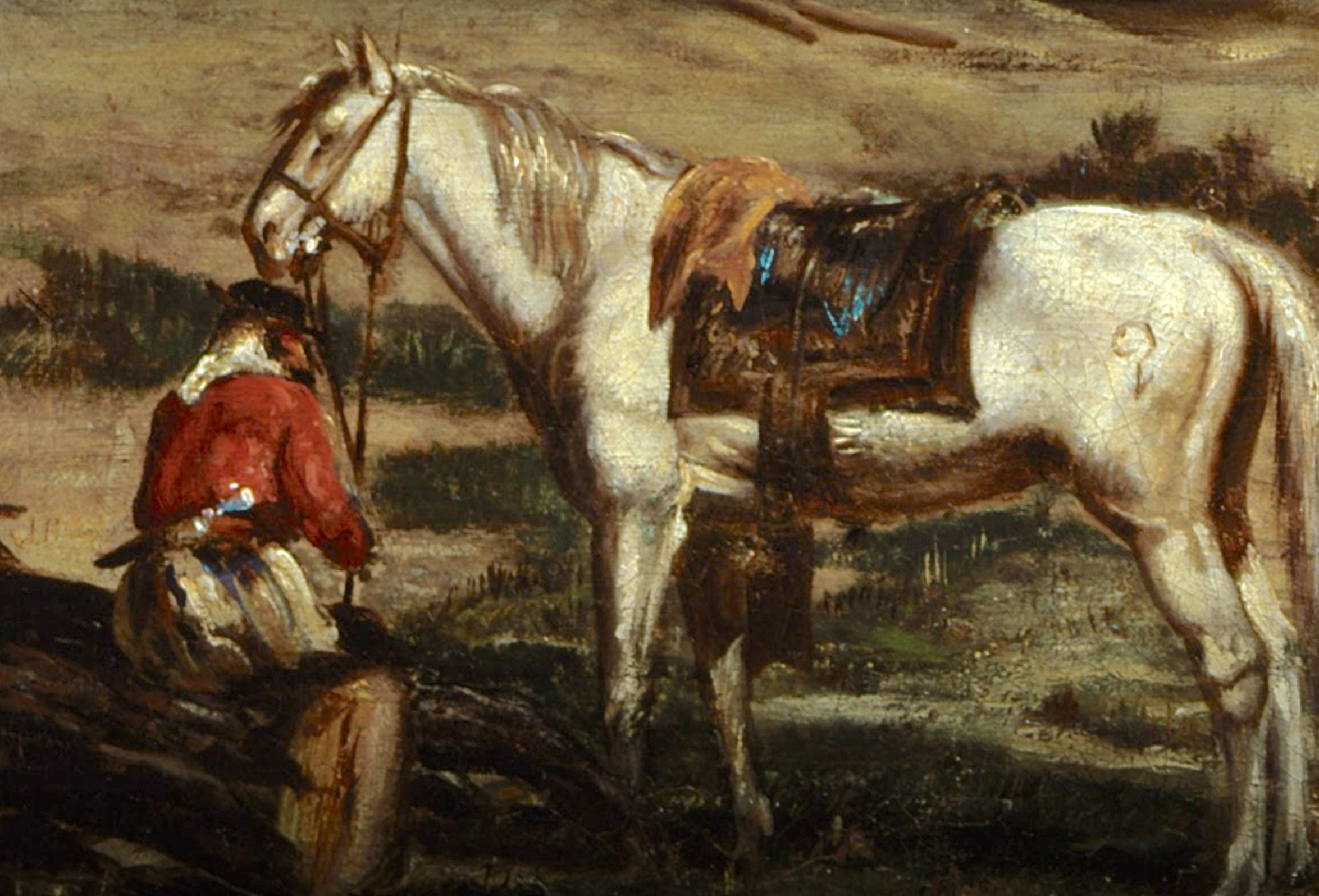
This is the second episode of Fragments of Humanity, a short series dedicated to portraying the peoples of the Americas in their most remarkable alterity.
This article pays tribute to the Gaucho.
The most cinephile readers might also think of the film The Gaucho, starring the talented Douglas Fairbanks.
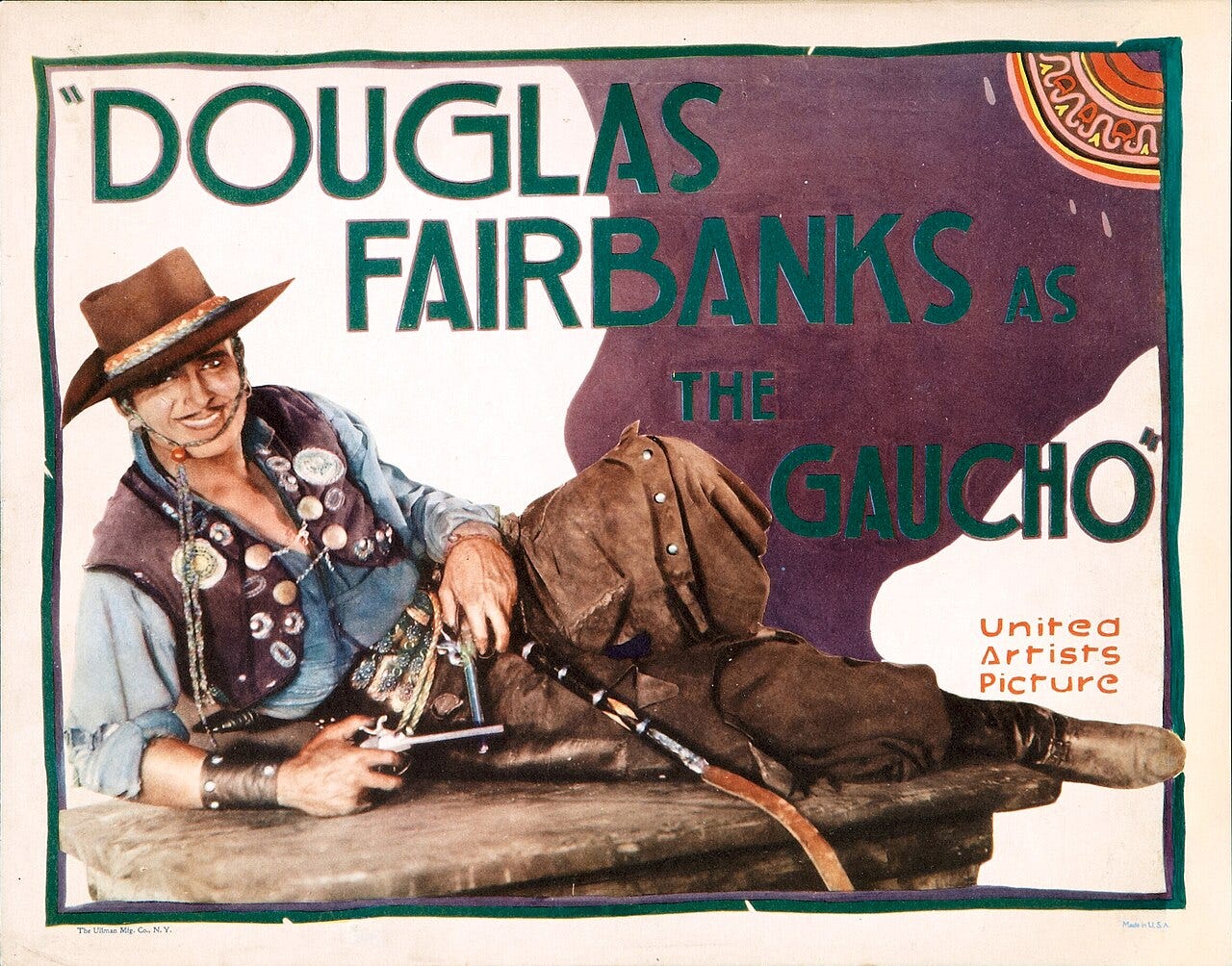
This movie led many to think that the Gaucho was an acrobat leaping through Andean peaks.
But the true Gaucho was a centaur of the flats, traditional horsemen and herdsmen emblematic of the plains (pampas) of Argentina, Uruguay, southern Brazil, Paraguay and Chile.
Etymology
The word Gaucho doesn’t have a stable linguistic root.
While the Quechua word huachu (orphan, solitary) is a plausible explanation, linguists also see the influence of the Portuguese Gauderio (vagabond).
Several hypotheses have been proposed, though none are universally accepted.
Uruguayan sociolinguist José Pedro Rona places the origin of the word in the buffer zone between Uruguay and Brazil, and in the wider River Plate region.
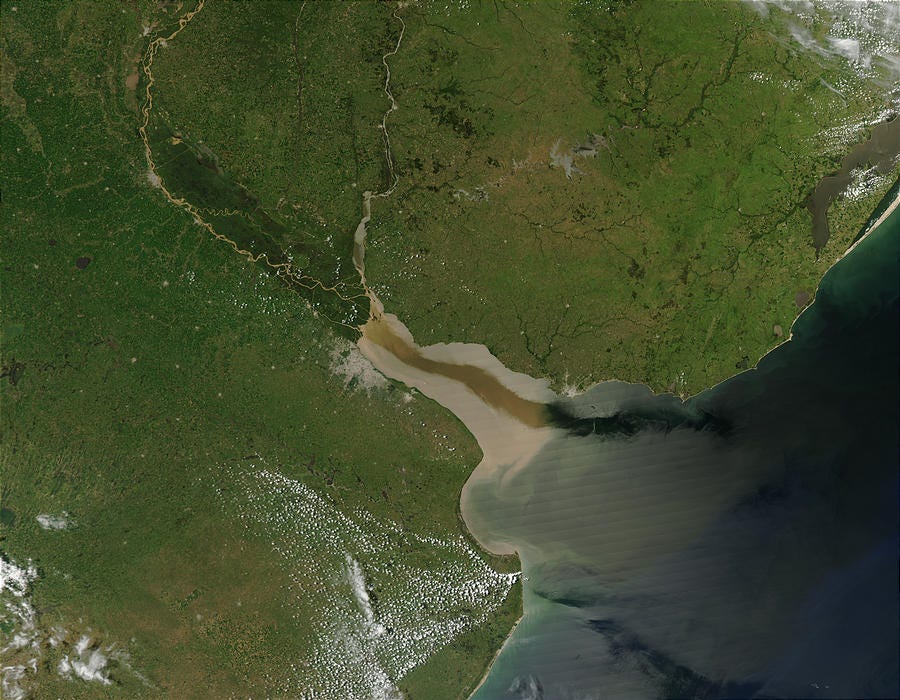
According to his theory, the word Gaucho derives from the indigenous Charrua word “Garrucho”, that refers to an old Indian or even a despicable person. This was then transformed into gahucho by Portuguese phonetics before losing its aspirated “h” through contact with Spanish.
In 18th-century colonial records, Gauchos were not described as pastoral workers but as itinerant horsemen often operating outside formal labor structures. The term was, as José Pedro Rona’s theory suggests, even an insult.
Ultimately, the term designates a condition before it describes a culture.
The Art of Mastering the Pampas
The Pampa is a vast region of fertile grasslands and temperate steppes in Argentina, Brazil, and Uruguay.
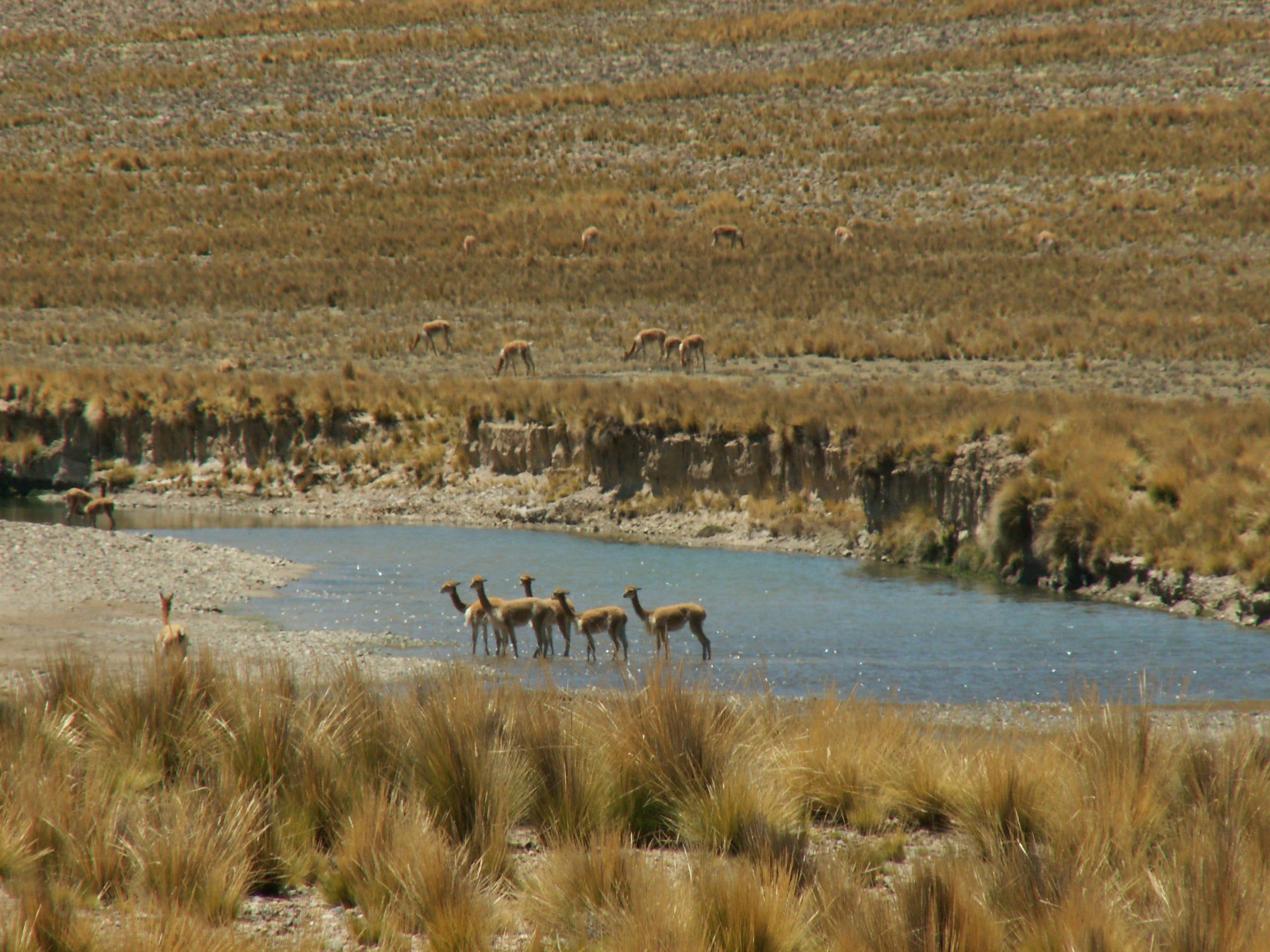
Gaucho cultures emerged there.
This territory is defined by its extreme horizontality, its climatic exposure and low vegetation (a dominance of grasses as well as limiting resources of wood and shelter).
This environment requires mobility and logistics.
The gaucho is, above all, a way of exploiting and navigating an open territory.
Genesis and Fundamental Traits
The emergence of the Gaucho is inseparable from the transformation of the Río de la Plata basin between the 17th and 18th centuries.
Four structural mutations are related to the emergence of the Gaucho.
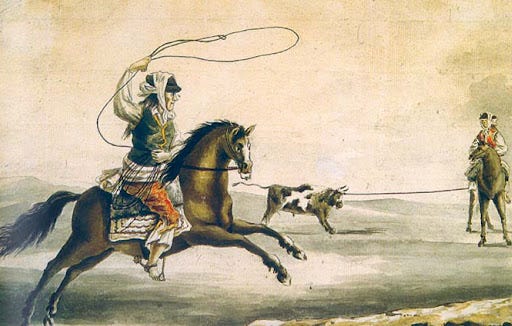
Feralization of livestock
Following the introduction by Iberian colonists in the 16th century, cattle and horses rapidly multiplied in the open grasslands due to the relative absence of predation pressure, the low population density, and the minimal regulation of land use.
This process led to the formation of vast populations of semi-wild cattle (ganado cimarrón), which became a primary economic resource for hides export to Europe, as well as tallow (used in candles and industrial processes).
A brittle colonial structure
The Río de la Plata was a territory with a low density of permanent settlements, limited administrative enforcement, and blurry territorial boundaries between Spanish and Portuguese domains.
This structural weakness allowed the advent of non-regulated actors capable of exploiting dispersed resources.
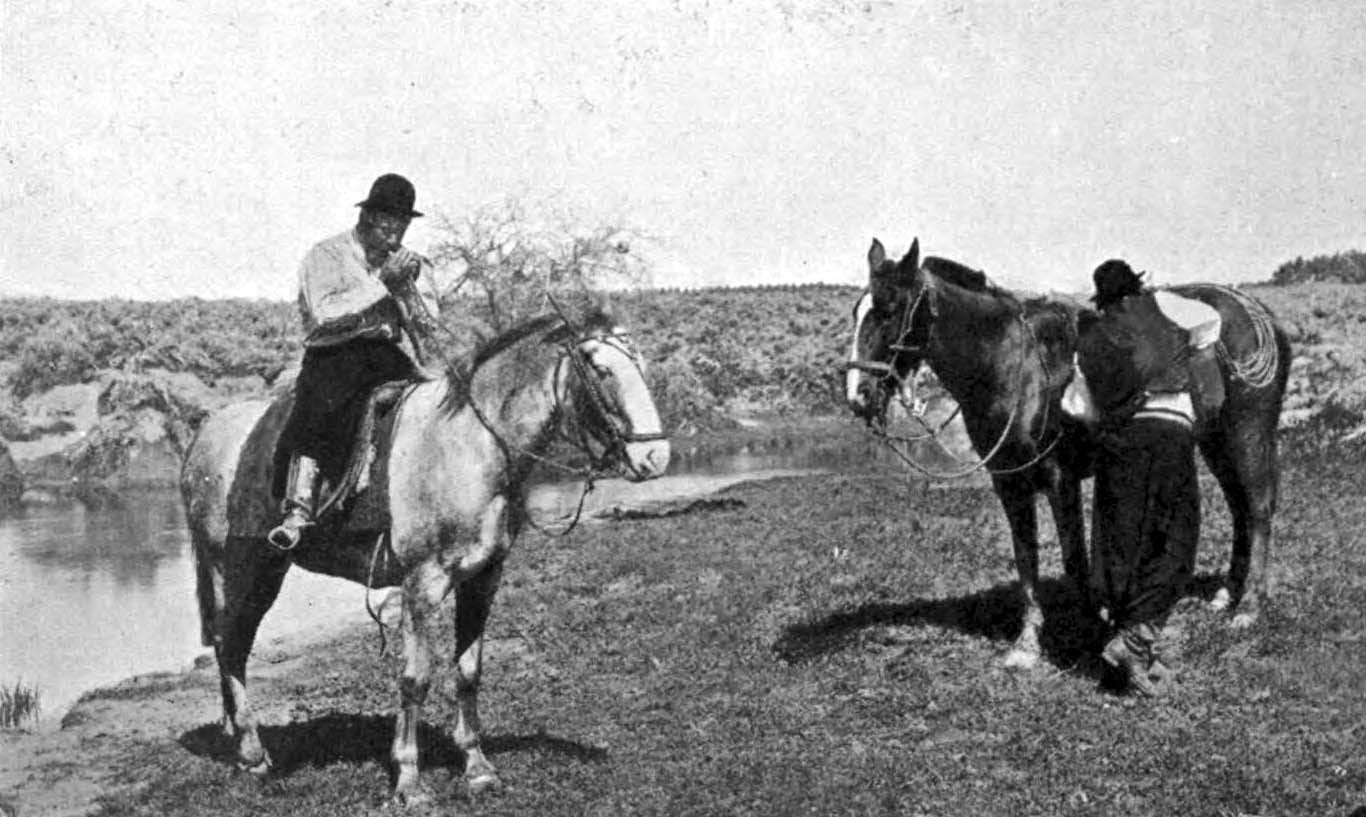
A mobile workforce
The early Gauchos managed a brilliant functional adaptation to those frontier conditions.
An important nuance has to be made there:
Gauchos were not a unified ethnic group, but a heterogeneous population including mestizos (Spanish-Indigenous), displaced Europeans as well as escaped laborers or army deserters.
The anthropological and defining features of the Gaucho has little to do with origin, but more with high mobility across open terrain and advanced horsemanship skills.
Pastoralism
The progressive consolidation of land ownership, particularly through the expansion of large estates (estancias) initiated a major transformation.
This partly forced the integration of Gauchos into the rural labor system as herders without eradicating the freedom of the Gauchos model.
Social Forms and Gaucho Culture.
First of all, Gaucho culture is not an isolated and diluted product within a nation-state, but actually a source of national pride.
The Martín Fierro Poem by José Hernández turns the gaucho as a resilient figure against corruption and the epitome of a free man.
Contrary to this solitary image, Gaucho culture is also based on a codified collectiveness.
Gaucho traditionalism includes annual cattle-branding “rites”, folk-music, payada (an impromptu duel of sung poetry), mate consumption (which itself has a codified, circular ritual structuring social interactions), asado (slow-cooking meat), or esgrima criolla (a knife duel, where the poncho serves as protection).
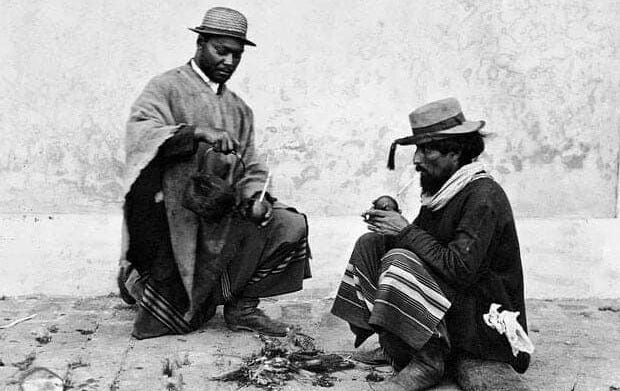
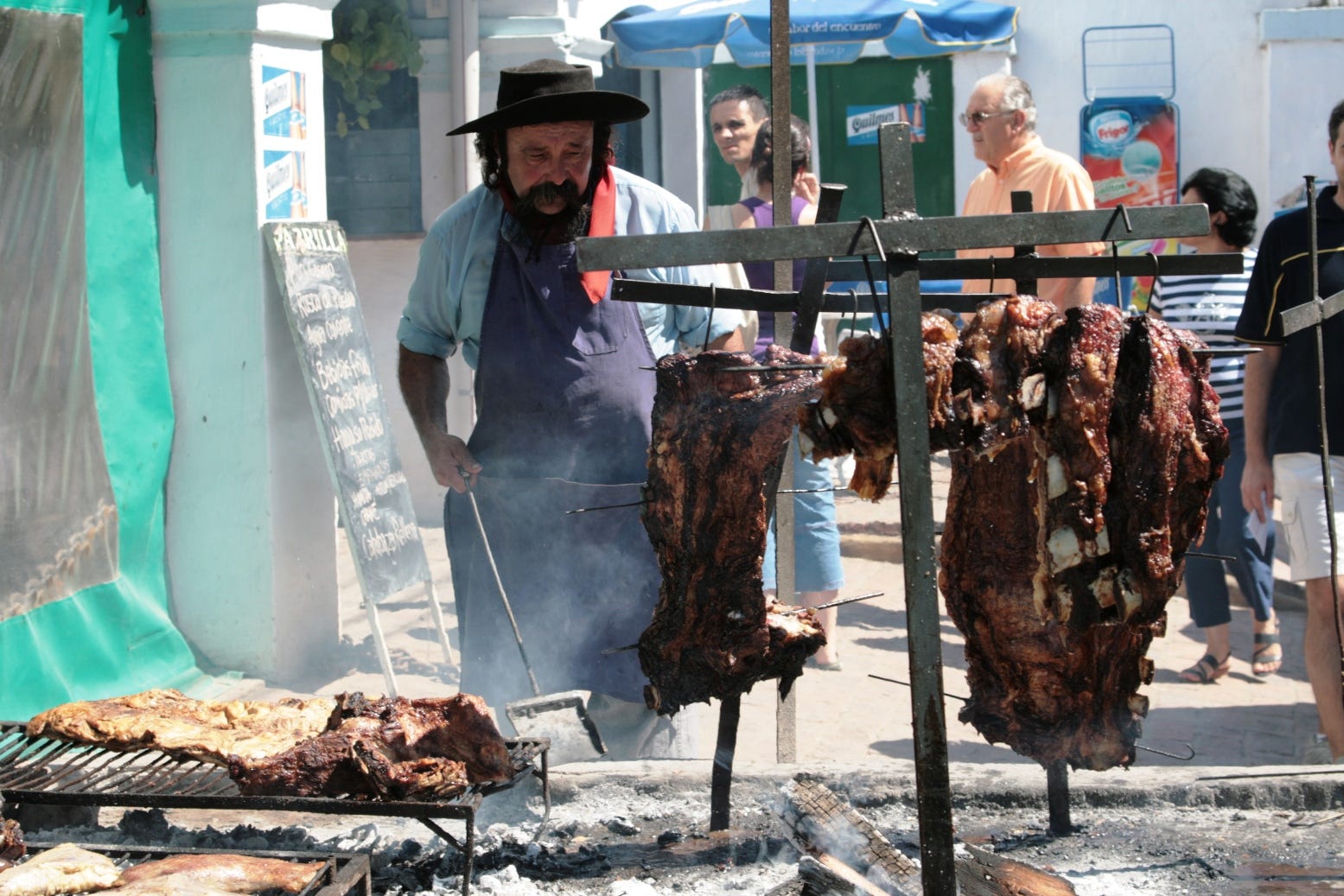
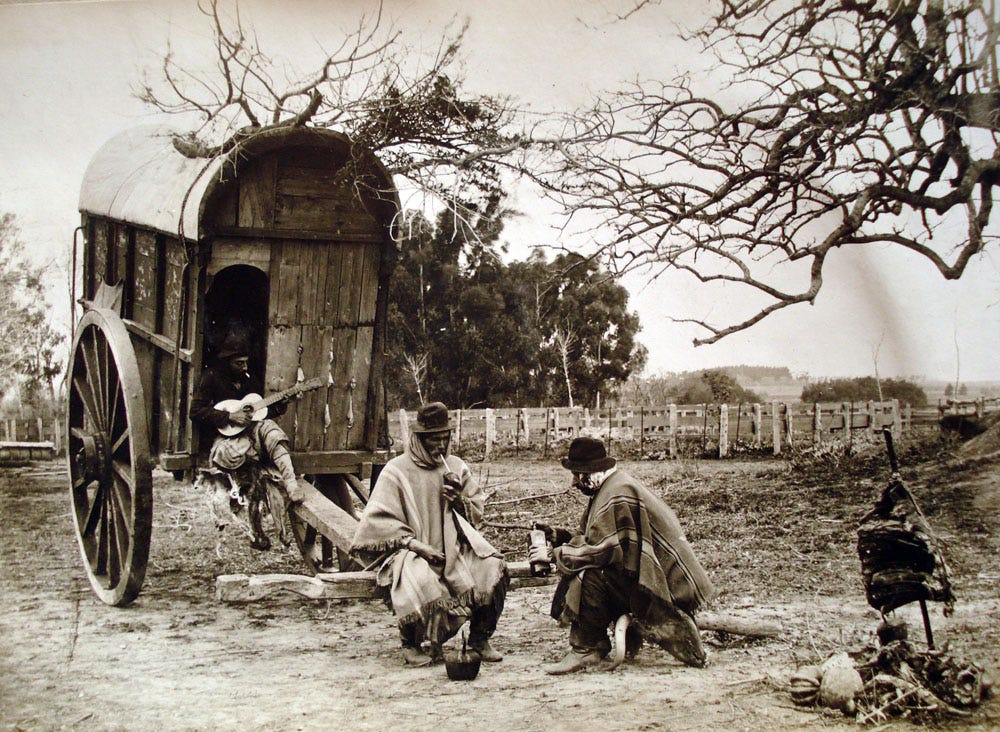
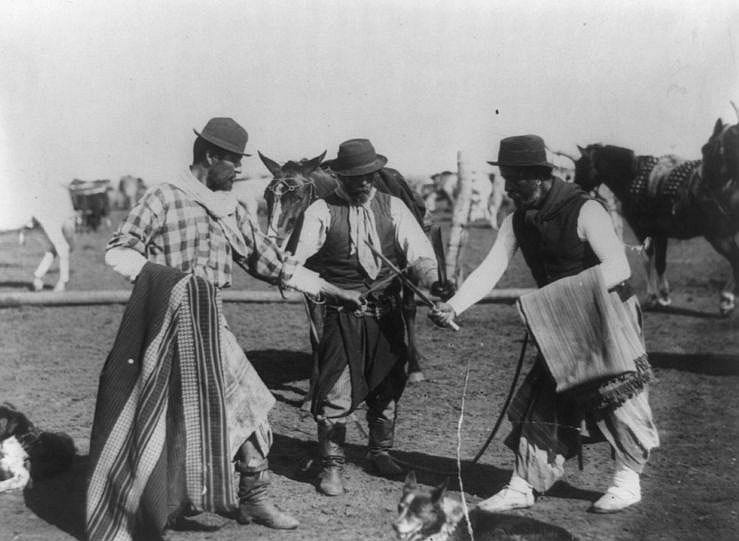
Gaucho culture is a culture of performance, it is profoundly physical, verbal, and social.
The Gaucho’s Tools
Gaucho material culture is equally destined to performance.
Everything is built for riding, exposure, and livestock control in an open environment.
The facón, a long knife worn at the belt, concentrates most functions: butchering, cutting, eating, and historically fighting.
The boleadoras, allowing a rider to immobilize cattle or horses in open terrain where pursuit alone is inefficient.
The lazo, a rawhide rope, serves for capture and restraint, while the rebenque provides short-range control of the horse. None of these tools are interchangeable; each corresponds to a specific operational need.
Clothing is also performative.
The Poncho is a thermal layer, a rain barrier, a ground cover, and, in certain contexts, a defensive surface.

At the center of this system is the Criollo horse.
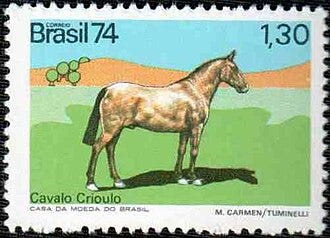
Selected over generations, it is not optimized for speed but for endurance, resistance, and recovery.
It allows continuous movement across unfenced land, precise positioning within herds, and rapid mobility when animals disperse.
The horse is not a complement to the Gaucho. It is the condition sine qua non of success of the entire system.
Modern Transformations
This system begins to weaken in the 19th century with the enclosure of land and the consolidation of large estates.
The Gaucho did not disappear. He became a rural worker. But mobility persisted, under new constraints. Those skills remain, but their context changes.
Technological shifts has of course accelerated this transition. Modern fencing reorganizes space, motorized transport reduces dependence on the horse in certain tasks, industrial livestock systems impose new rhythms and legal controls.
Yet, in extensive pastoral zones, horse-based work continues to be operationally efficient.
Ultimately the Gaucho is not a cultural ghost. He is the product of a precise geographical and anthropogenic configuration: open grasslands, abundant feral livestock, and initially weak territorial control.
A figure of Freedom and Adaptation.
The first episode is available below.
Join the Journey.
Immemorial is a long-term project dedicated to exploring sacred landscapes, and the pursuit of a culture and Human Legacy.
If you value an anthropological approach to the world, consider becoming a subscriber.
Your support is the engine that will allow this independent project to grow.
What freedom they must feel in such vast pastoral lands! Obviously at the cost of comfort, but still
Very cool. Have you read Origin by Jennifer Raff? All about the current state of our knowledge of the peopling of the Americas from an ancient DNA standpoint. I imagine with how quickly that field moves, it's a bit out of date even at a couple years old, but very worth the read if you haven't yet!